
Goa Cashew Nuts - One Of The Most Sought-After Varieties Of Indian Cashew Nuts

Quality & Standard
Ethically sourced from the best cashew producing nations in the world grown in the biggest cashew farms in the globe.
Best In the Industry
Subject to stringent quality-assessment measures that are carried out both manually as well as with using advanced instruments.
Cost-effective
Our client's enjoy being the sole purveyors of some of the tastiest, organically-grown cashews available in the globe.
Quick Enquiry
An Overview Of The Indian State Of Goa
Goa is an India state located in the region that's referred to as the Konkan coast. It's neighbors are Maharashtra to the north and Karnataka to the east and south. The Arabian Sea forms its western coast. It is the smallest of all Indian states by area and the fourth smallest by population. Goa has the highest GDP per capita of any Indian state, at two and a half years times that of the country. It was classified as 'best placed State' by the Eleventh FinanceCommission for its infrastructure and ranked first for 'best quality of life' in India by the National Population Commission based on twelve indicators. While Panaji is its state capital, Vasco da Gama is the largest city in the state. Goa covers an area of 3,702 square kilometers or 1,429 square miles.
The...
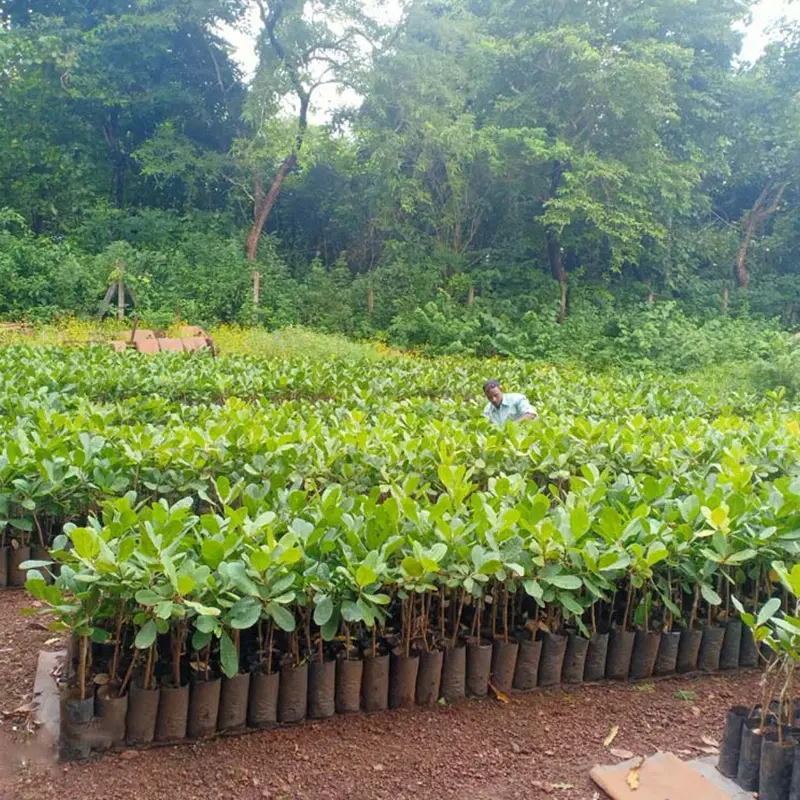
Goa with a production of close to thirty thousand tonnes of raw cashews over an area of about sixty thousand hectares occupies the sixth position in terms of the area used for cashew cultivation and production in India. The productivity of the cashew trees in the state is roughly about four hundred kilograms per hectare. This is considerably lower than the national mean value which is close to eight hundred kilograms per hectare. The productivity is much lower than that of all other cashew producing states in India. Cashew cultivation plays an important role in Goa's economy. Get in Touch with us !
Places In Goa Where Cashew Is Grown
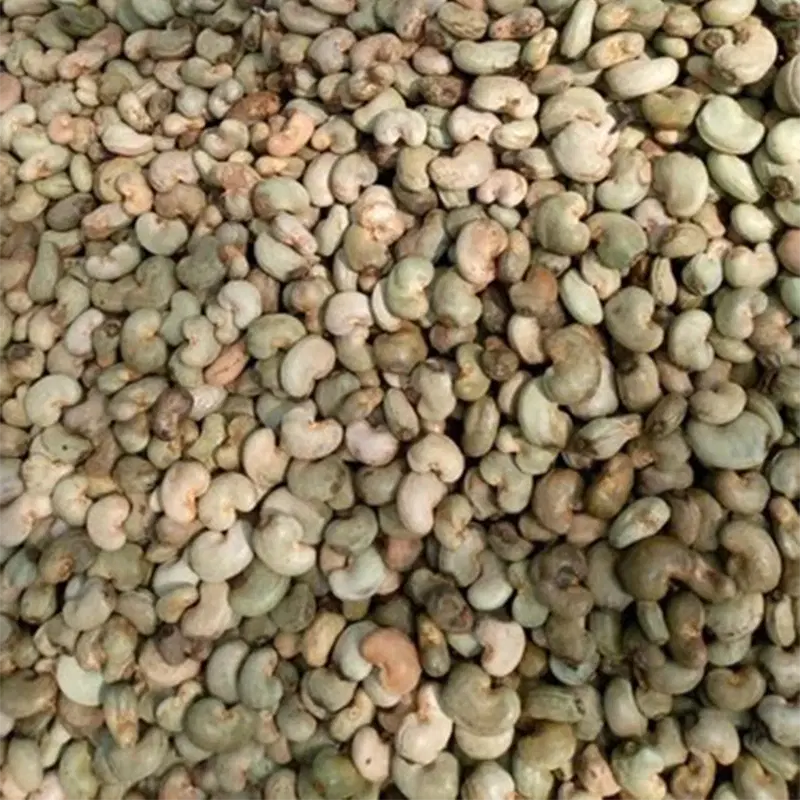
The area devoted to cashews has been increasing steadily in the state of Goa over the past five decades. Goa is a very advanced horticultural state covering over a hundred thousand hectares of fruit crops. The area devoted to cashew cultivation in the state is spread over two districts, North Goa (covering the majority) and South Goa. Some of the most prosperous cashew producing Taluks in Goa include Sattari, Permem, Bicholim, Ponda, Sanguem, Quepem and Canacona Taluk."
Optimal Planting Period
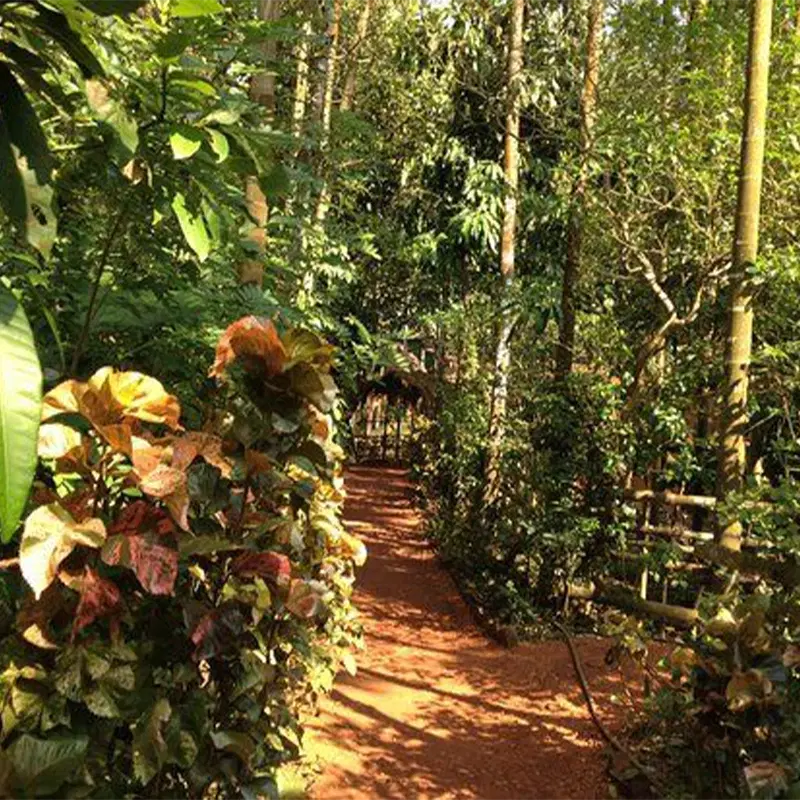
The most ideal time to plant cashew grafts in Goa, is the period between June and July. Immediately after the onset of the monsoon, farmers plant these grafts in the center of each pit and support it with suitable staking. By completing their planting before the end of June, they take full advantage of the monsoon. They also make sure to plant the grafts at least ten to fifteen centimeters above the ground to avoid flooding and pests. Planting during this period ensures better implantation of the grafts on the ground. Cashew farmers in Goa are also particular about ensuring the regular removal of lateral shoots below the graft joint.
Softwood Grafting
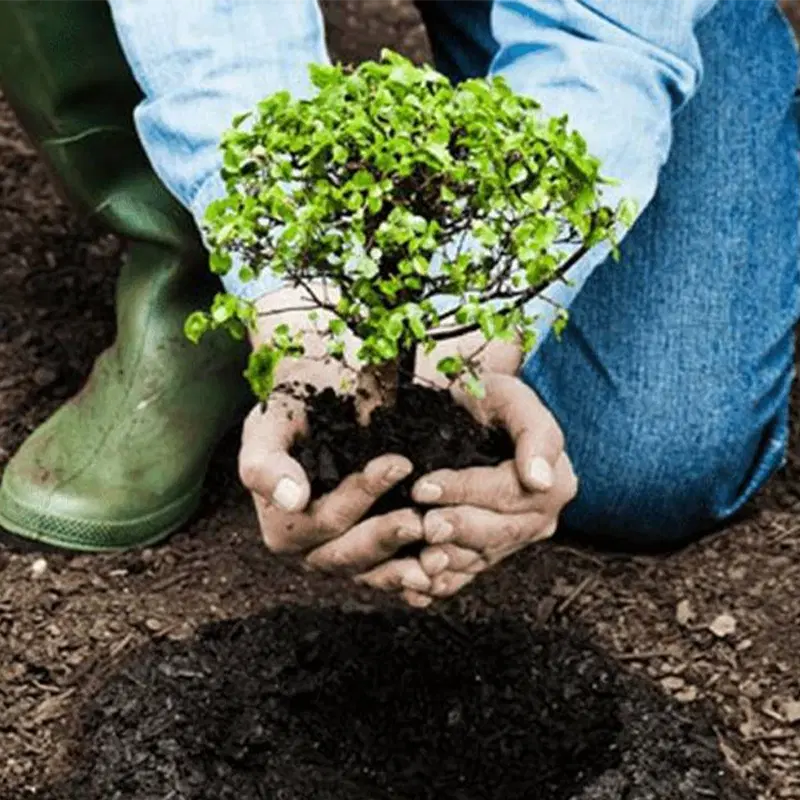
The cashew nut is reproduced commercially by grafting softwood. There are four stages to this process - "
Rearing The Rootstock
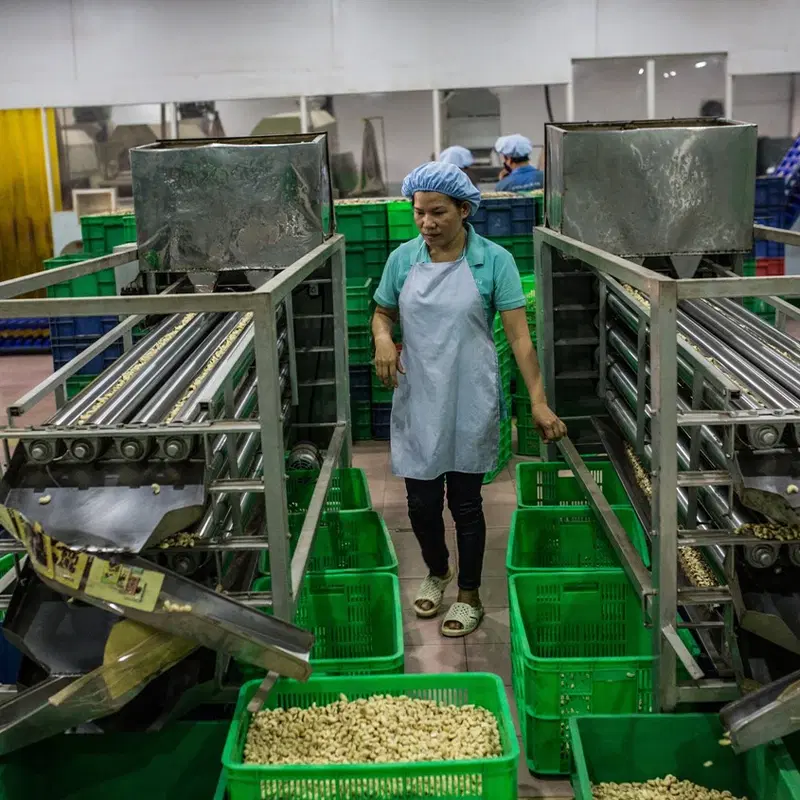
Farmers in Goa collect fresh and healthy seeds during the season, dry them for around two to three days and then submerge them in water to remove those seeds that are floating ones. They let the seeds soak overnight and then also soak them in a solution containing forty grams each of forty percent BHC and Fytolan in ten liters of water for five minutes. The farmers then incorporate the FYM (at a measure of three tons per thousand square meters) into the soil thoroughly to prepare the beds for stone sowing. After preparing a raised bed that's fifteen centimeters high and one meter wide, they sow the treated seeds in a single layer and cover them with a thin layer of soil and FYM mixed in a 1: 1 ratio. The farmers make sure to irrigate the bed regularly. The seeds then germinate in fifteen to thirty days time. Those seeds that germinate with a good circumference of the epicotyl region and already developed tender leaves, are used as rootstock for stone grafting (epicotyl graft)."
Selection & Preparation Of The Graft
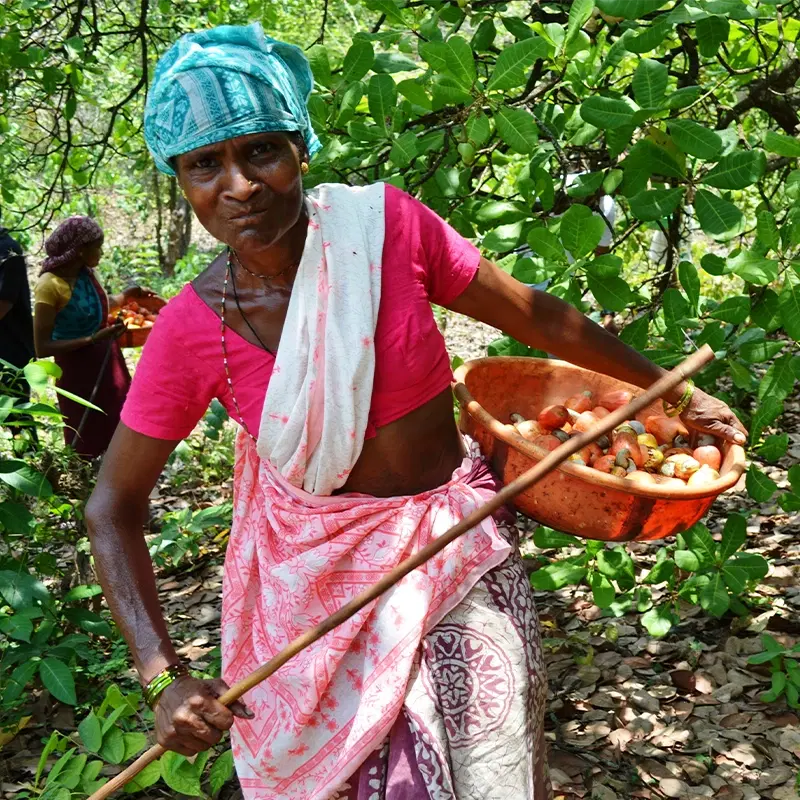
Goan cashew farmers select the tree of the graft variety of choice for multiplication. They collect healthy, three to four month-old ripe shoots that are between fifteen and twenty centimeters in length, and that also have dormant terminal or lateral buds. Each shoot forms an offspring stick and is used for grafting. Farmers make two slanted downward cuts (four to six inches long) on opposite sides at the bottom end of the scion stick to make it in a wedge shape."
Grafting
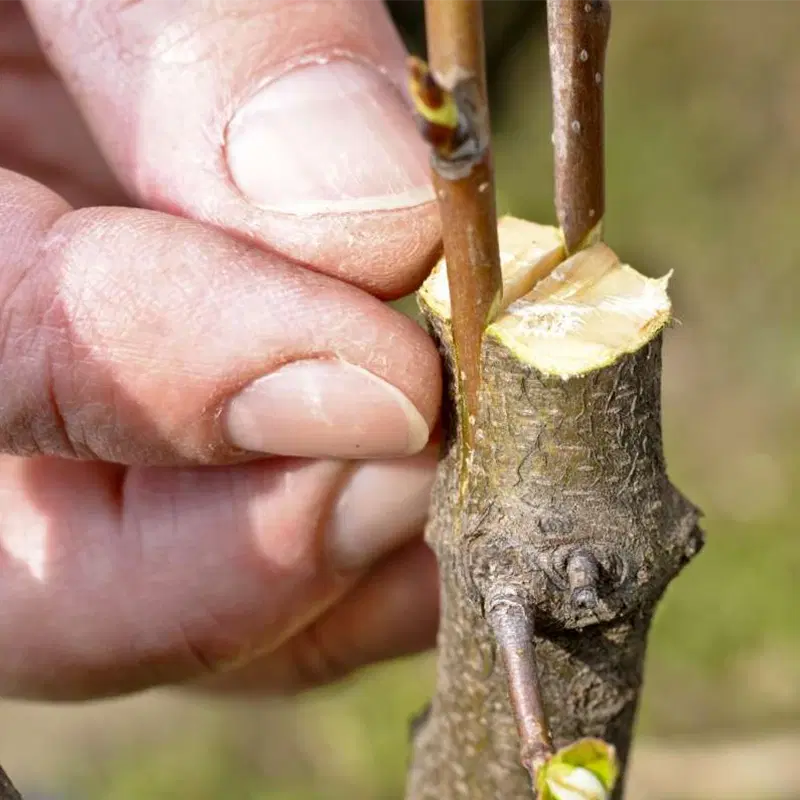
For epicotyl grafting, cashew farmers uproot the plant with the stone from the bed before the leaves expand and decapitate it to a height of eight to ten centimeters. They make a slit around four to six centimeters deep in the middle of the decapitated stem, giving a longitudinal cut downwards. The farmers then insert the corner of the scion into the slot of the rootstock so that the scion cambium and the rootstock come into perfect contact with each other. After tying the graft joint firmly with a strip of polyethylene (one and a half centimeters wide and about thirty centimeters in length with a thickness of a hundred gauges), they plant the tied scions in a 30cm x 20cm three hundred gauge poly bag with drainage holes and filled with a mixture of potting soil, sand and cow dung (in 2: 1: 1 ratio). Goan farmers always ensure that this bag planting is done in such a manner that the graft joint remains above ground level in the poly bag. Likewise, for softwood grafting also, they make the slit in the softwood region of the seedling keeping two to four leaves fully unfolded just below the slit region on the stem, insert the scion stuck in the slit and tie it firmly in the joint region. In this type, before the actual transplant, the plants are transferred to the polythene bags (30cm X 20cm, three hundred gauge with drainage holes) containing the potting mix (2: 1: 1) to promote thickness. These cultivated seedlings are used for grafting softwood."
Maintenance
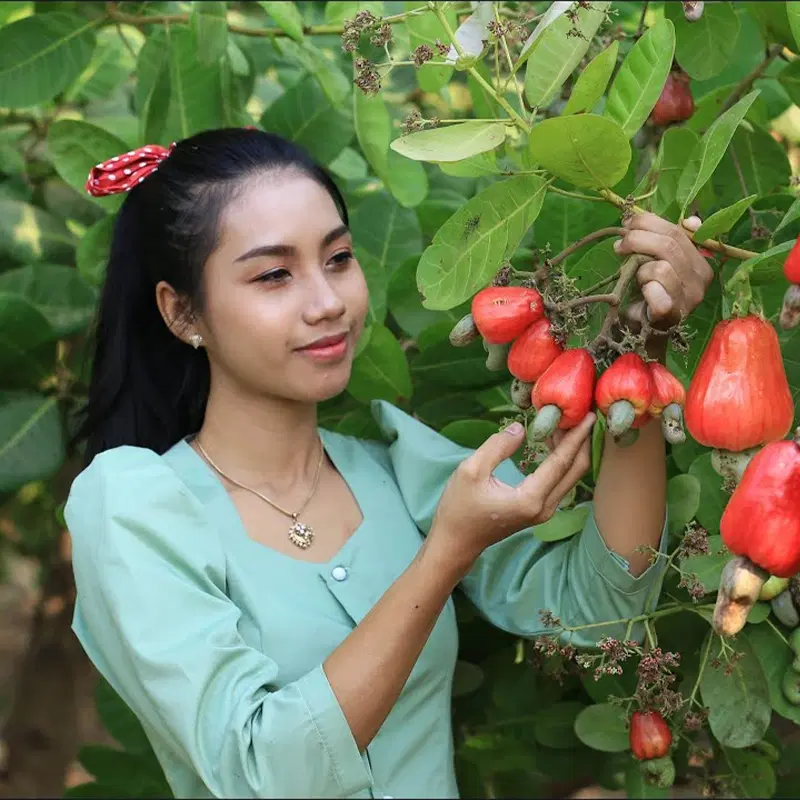
Goan cashew farmers always take care to keep the grafted plants in warm, humid conditions in the shade for about fifteen to twenty days, until the buds germinate on the scion. They water the scions regularly depending on the weather conditions and periodically remove any side shoots growing on the rootstock below the scion joint. They remove the polyethylene tape used to attach the graft joint after three months to prevent the cancellation of the stem. They also protect the scions against leaf-eating insects and shoot borers by spraying a combination of Nuvacron and water (two milliliters for every liter of water) on them in the nursery. After six months, they move the scions to another location or simply lift the scions and keep them in place once a month to prevent them from hitting roots in the soil below."
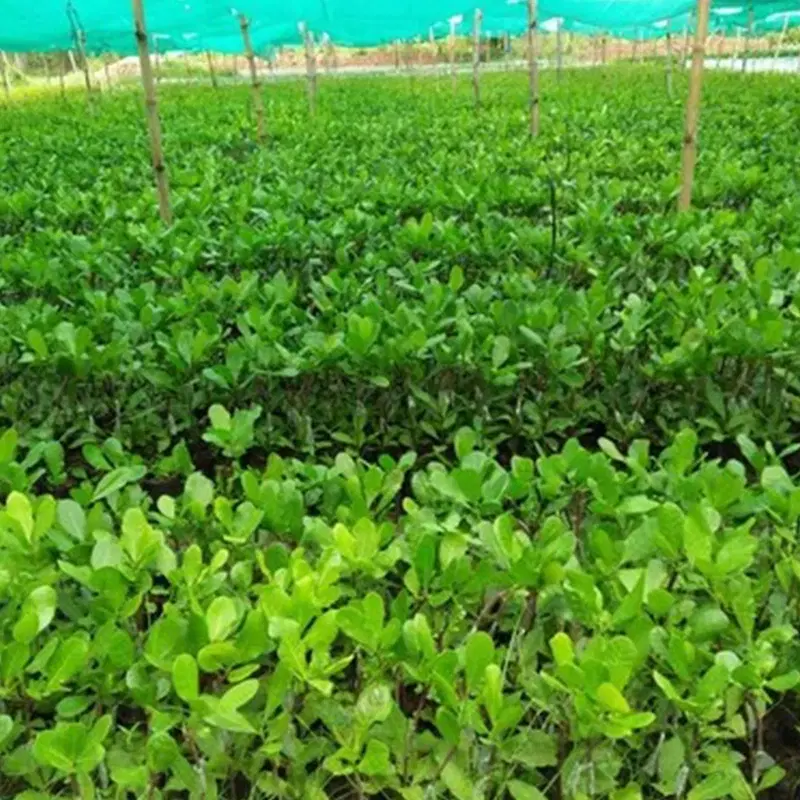
Selection & Preparation Of The Graft
Goan cashew farmers select the tree of the graft variety of choice for multiplication. They collect healthy, three to four month-old ripe shoots that are between fifteen and twenty centimeters in length, and that also have dormant terminal or lateral buds. Each shoot forms an offspring stick and is used for grafting. Farmers make two slanted downward cuts (four to six inches long) on opposite sides at the bottom end of the scion stick to make it in a wedge shape."
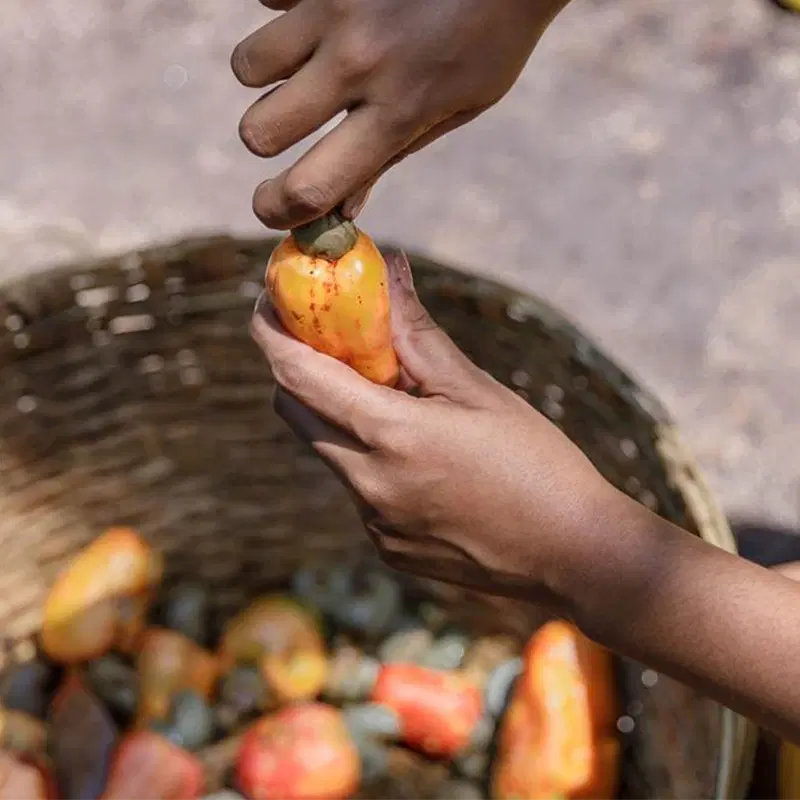
Grafting
For epicotyl grafting, cashew farmers uproot the plant with the stone from the bed before the leaves expand and decapitate it to a height of eight to ten centimeters. They make a slit around four to six centimeters deep in the middle of the decapitated stem, giving a longitudinal cut downwards. The farmers then insert the corner of the scion into the slot of the rootstock so that the scion cambium and the rootstock come into perfect contact with each other. After tying the graft joint firmly with a strip of polyethylene (one and a half centimeters wide and about thirty centimeters in length with a thickness of a hundred gauges), they plant the tied scions in a 30cm x 20cm three hundred gauge poly bag with drainage holes and filled with a mixture of potting soil, sand and cow dung (in 2: 1: 1 ratio). Goan farmers always ensure that this bag planting is done in such a manner that the graft joint remains above ground level in the poly bag. Likewise, for softwood grafting also, they make the slit in the softwood region of the seedling keeping two to four leaves fully unfolded just below the slit region on the stem, insert the scion stuck in the slit and tie it firmly in the joint region. In this type, before the actual transplant, the plants are transferred to the polythene bags (30cm X 20cm, three hundred gauge with drainage holes) containing the potting mix (2: 1: 1) to promote thickness. These cultivated seedlings are used for grafting softwood."
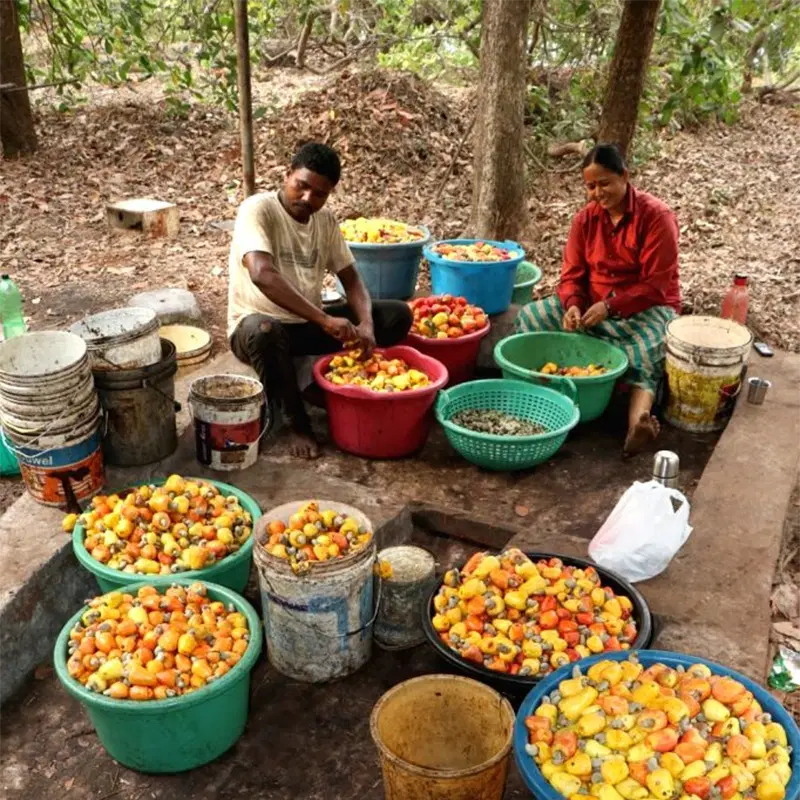
The In Situ Graft Method
In order to reduce field mortality, obtain better growth and uniform establishment of the orchard for early economic return, Goan cashew farmers also make use of in situ grafting. In this method, the fresh nuts from the current season are sown in the pits filled with topsoil and FYM to raise the rootstocks in the orchard itself. Those seedlings that grow really fast in twelve to fifteen months with fourteen to sixteen green leaves, are veneer grafted with scion sticks of the desired variety. The favorable weather conditions during this period in Goa ensure a higher rate of in situ transplant success. Capping with poly bags can be done on the tip to achieve good success. These scions grow very quickly and reach maturity in a few years thanks to an undisturbed taproot system unlike scions raised in nurseries."
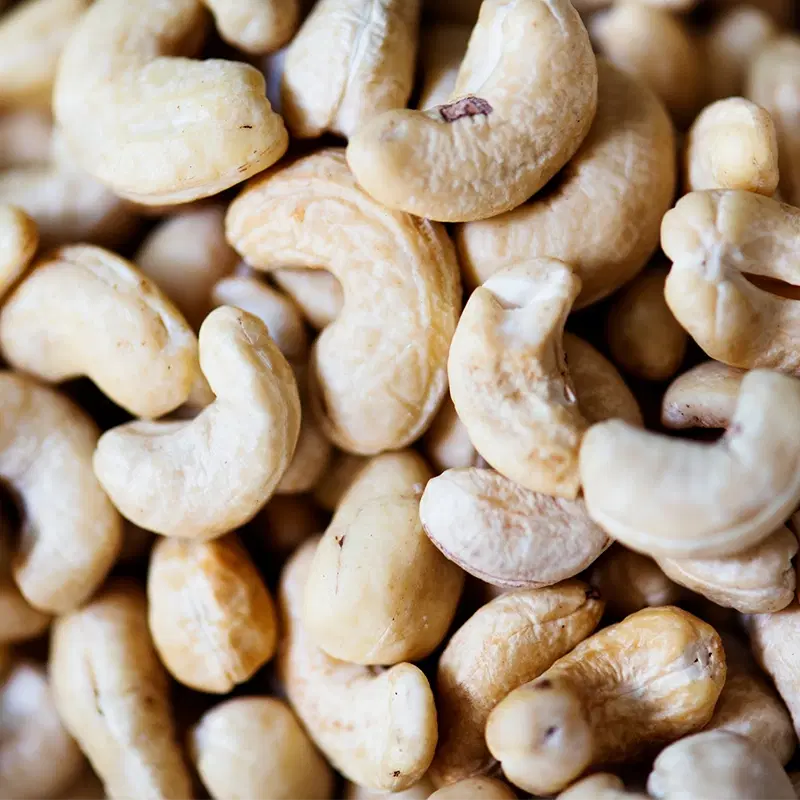
Topworking
Goan cashew farmers convert low yielding cashew trees to desired commercial varieties by this method. The trees to be converted are on either side of grafted ore coppices grafted onto new flesh with scions of the desired variety."
Harvesting Of Cashew Nuts In Goa
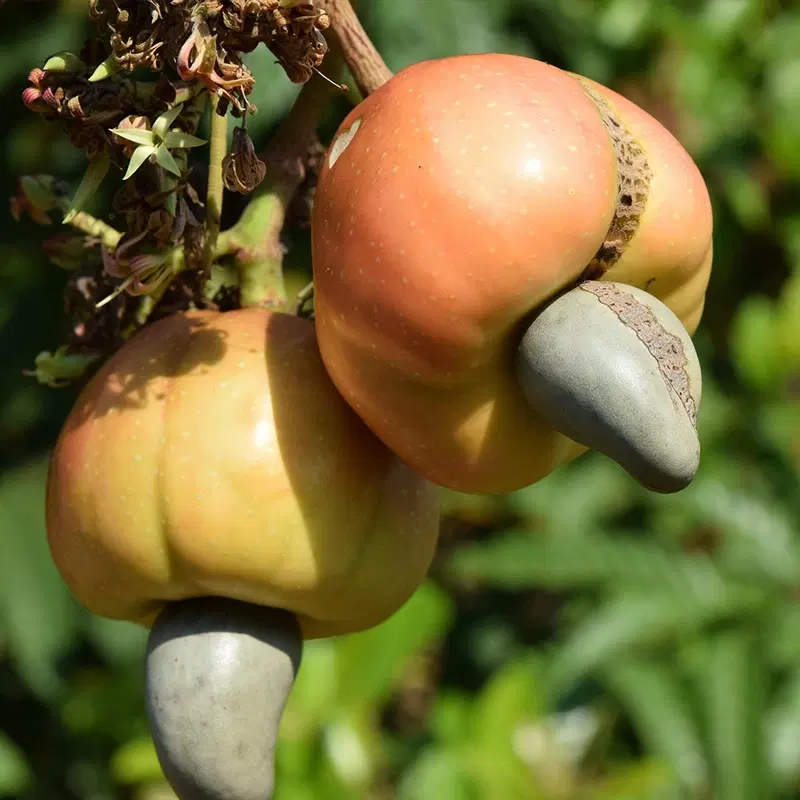
Goan farmers always harvest their cashew plants from the fourth year, before which flowers, if any, can be removed to promote proper vegetative growth. The harvest starts from the month of February and continues until May. They get anywhere from ten to fifteen kilograms per tree, i.e two to three tonnes per hectare of raw nut production from the tenth year onwards, and about seventy to hundred kilograms per tree i.e fifteen tonnes per hectare) of cashew apples as well."
Storage
Nuts separated from apples are washed and dried for three days in the sun, and then stored in burlap bags for further processing. Those nuts that are well-dried nuts can be stored for much longer than ones that have a bit of moisture in them."
Varieties Of Cashew Nuts Grown In Goa
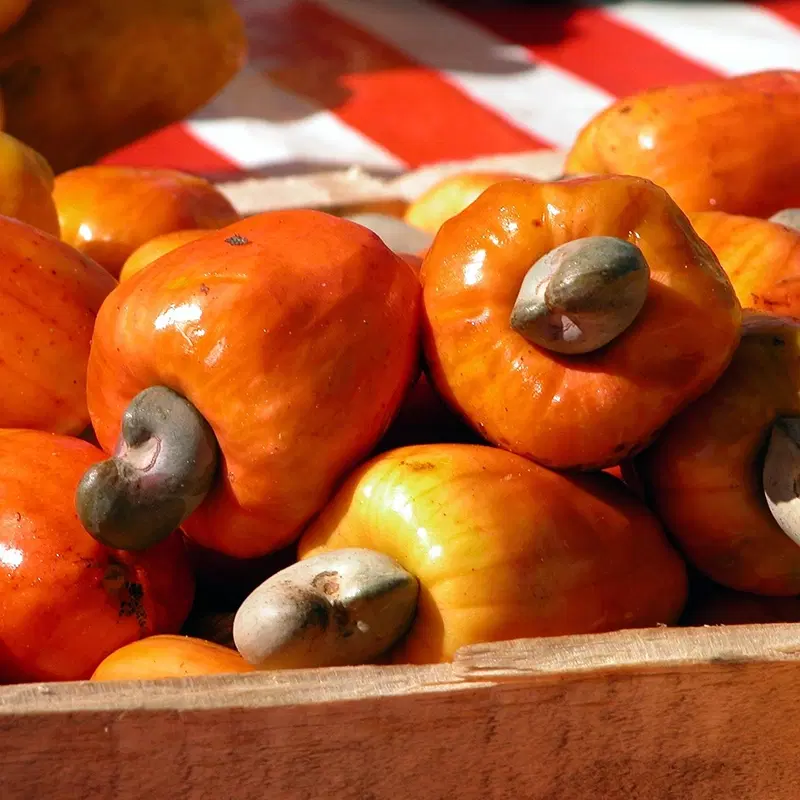
Although there are numerous varieties of cashew grown in Goa, the ones that Goan farmers resort to the most are - Goa-1 (Balli-2), Vengurla-4, and Vengurla-7. Farmers across most places in Goa where cashew is grown, are always on the lookout for promising local tree grafts with fatty nuts, high yield and larger apples that can work well in their respective growing regions. In order to minimize losses incurred because of pests and diseases as much as possible, Goan cashew farmers prefer planting scions of genetically enhanced varieties that are more pest and disease-resistant. "
What Will The Price Of Cashew Nuts From Goa In 2025 Be?
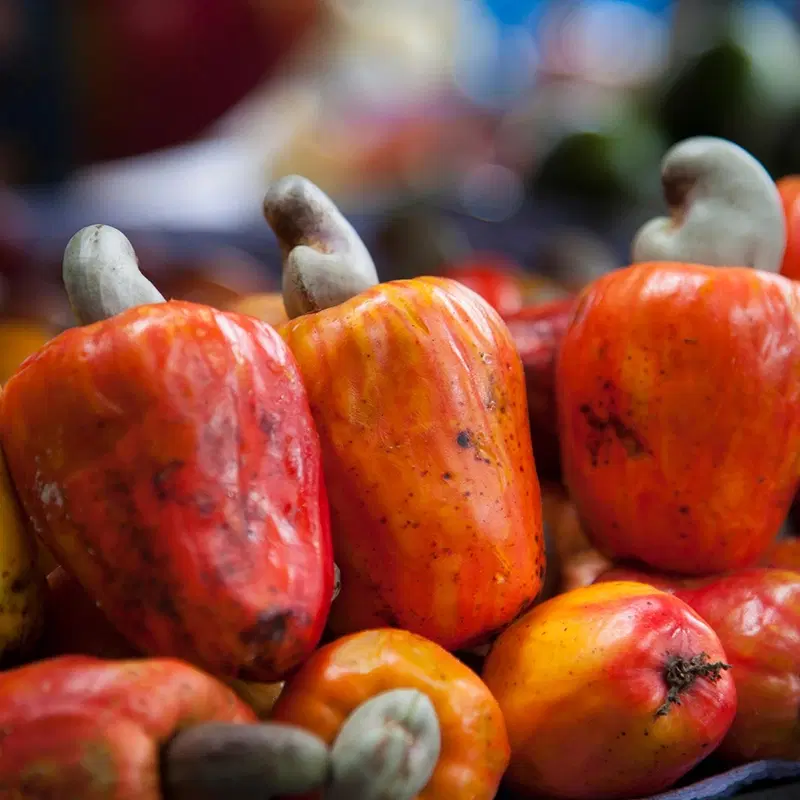
The prices of Goan cashews depend entirely on the quality of the harvest that cashew cultivators in the state have enjoyed. Goa in recent times has been prone to droughts. Heavy rainfall (which is a fairly recent phenomenon) has also hampered harvests in recent times. Abnormal monsoons and erratic temperatures cause delays in the cashew flower from blooming, sometimes even halting this process permanently. During these times when Goan farmers struggle to cope with irregular weather patterns, the price of cashews goes up as the yield also tends to be significantly lower than normal. International imports also play a role. Most retailers these days look to Africa for their cashew supply needs because of the significantly lower prices. While Goan farmers also have a market for their own cashews in foreign markets they rely on regional buyers for the bulk of their sales. "

Who we are
A little about scashew's nuts
Ever since we came into being, SCashews has strived to be the best at what we do - procuring, supplying and delivering raw and processed cashew nuts of impeccable quality to our global clientele. In doing so, we have carved a niche for ourselves, as reliable and renowned suppliers of both raw and processed cashews from the world's biggest cashew producing nations.
Quality & Standard
Ethically sourced from the best cashew producing nations in the world grown in the biggest cashew farms in the globe.
Best In the Industry
Subject to stringent quality-assessment measures that are carried out both manually as well as with using advanced instruments.
Cost-effective merchandise
Our client's enjoy being the sole purveyors of some of the tastiest, organically-grown cashews available in the globe.
Safe shipping/transport
Safe and fast shipping on all order
Quality & Standard
Ethically sourced from the best cashew producing nations in the world grown in the biggest cashew farms in the globe.
Best In the Industry
Subject to stringent quality-assessment measures that are carried out both manually as well as with using advanced instruments.
Cost-effective
Our client's enjoy being the sole purveyors of some of the tastiest, organically-grown cashews available in the globe.
Safe shipping/transport
Safe and fast shipping on all order
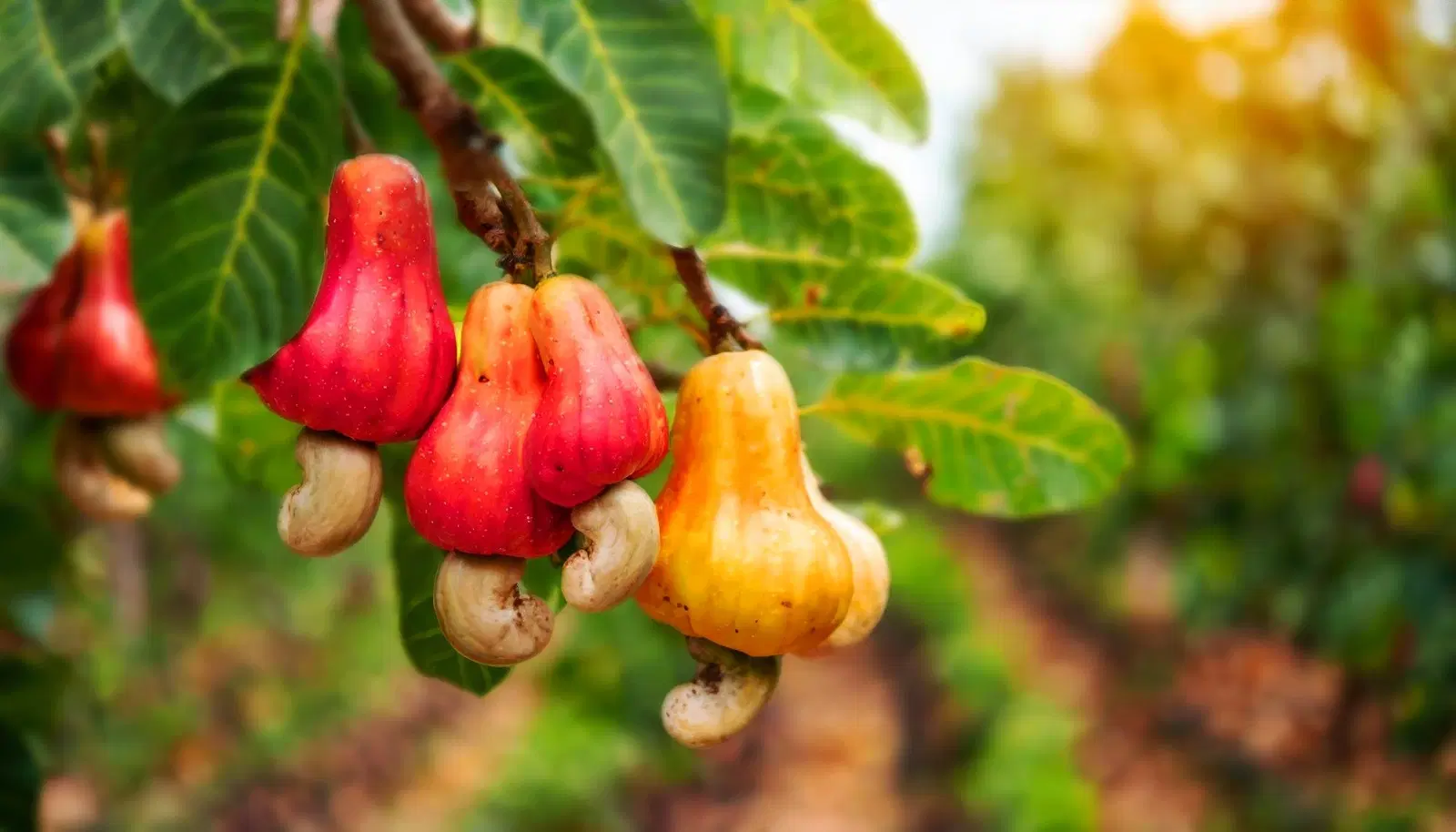

Want to get a batch of high-fat content Goan cashews shipped to your location? Let us know ‘contact us’ right away! SCashews supplies everyone from retailers and confectioners to restaurant chains and processing firms with cashews sourced from the biggest Goan cashew plantations. Offering the best prices for processed and raw cashews from Goa as well as maintaining complete supply chain transparency is why so many across the globe rely on us for their Goa cashew supply needs.