
The State Of Cashew Nuts Production Of Indonesia Demonstrates The Country’s Immense Potential
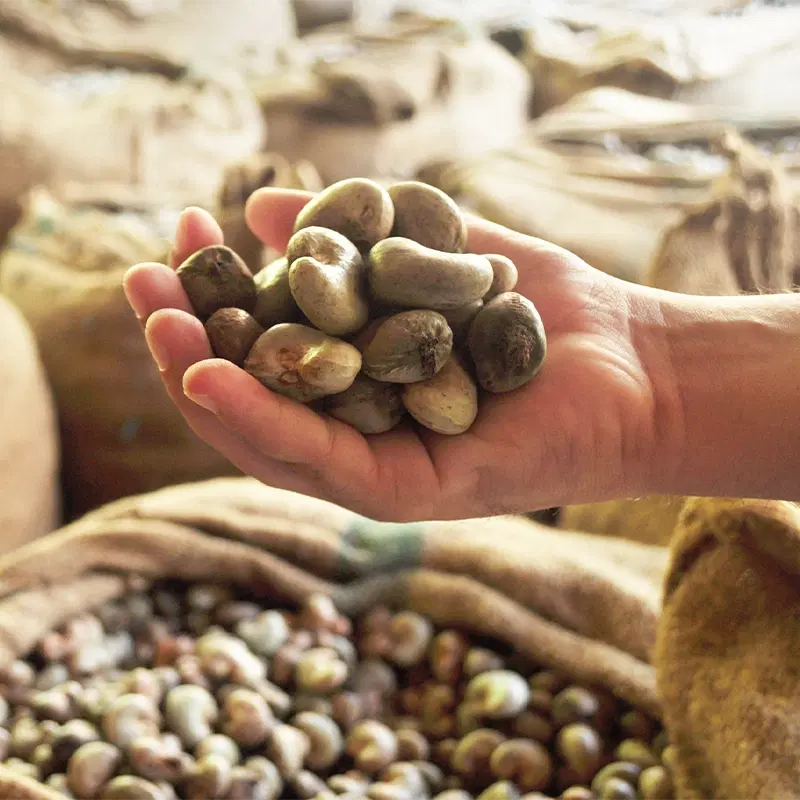
Cashews are a major crop throughout eastern Indonesia, with around three hundred thousand smallholder farmers involved in production. Most of the harvest is exported in the form of in-shell nuts, around fifty five thousand tons per year, and processed kernels, amounting to about three and a half thousand tons each year. Indonesia also has a burgeoning domestic market for cashew nuts.

Quality & Standard
Ethically sourced from the best cashew producing nations in the world grown in the biggest cashew farms in the globe.
Best In the Industry
Subject to stringent quality-assessment measures that are carried out both manually as well as with using advanced instruments.
Cost-effective
Our client's enjoy being the sole purveyors of some of the tastiest, organically-grown cashews available in the globe.
Quality & Standard
Ethically sourced from the best cashew producing nations in the world grown in the biggest cashew farms in the globe.
Best In the Industry
Subject to stringent quality-assessment measures that are carried out both manually as well as with using advanced instruments.
Cost-effective
Our client's enjoy being the sole purveyors of some of the tastiest, organically-grown cashews available in the globe.
Quick Enquiry
The..
Cashew cultivation in Indonesia was originally intended for reforestation purposes, especially in infertile areas with dry climatic conditions. Over the past two decades, however, the expansion of cashew acreage has been carried out solely for the economic potential of cashew nut production rather than for reforestation purposes. There is a steady increase in the area under cultivation of cashew nuts every year, especially in Eastern Indonesia where climatic conditions are favorable for cashew production. Covering an area of fifty eight thousand hectares which produced 9,000 tonnes in 1975, cashew nuts production in Indonesia increased to close to five hundred thousand hectares with a total production of 78,000 tonnes in 1996. Unfortunately, the increase in areas did not show a significant increase in production due to the low productivity of plantations."
The..
The volume of exported cashews has increased in recent years. In 1978, the country exported 39,000 tonnes, which rose to 55,000 tonnes in 1994. The volume of exports fell to 27,000 tonnes in 1996, partly because of the steady increase in domestic consumption. Indonesia's cashew harvests are mainly exported to India and the United States. Japan has also become an importer of Indonesian cashews. Over 90 percent of cashew production is done by Indonesia's smallholder farmers."
Primary Cashew Nuts Producing Regions In Indonesia
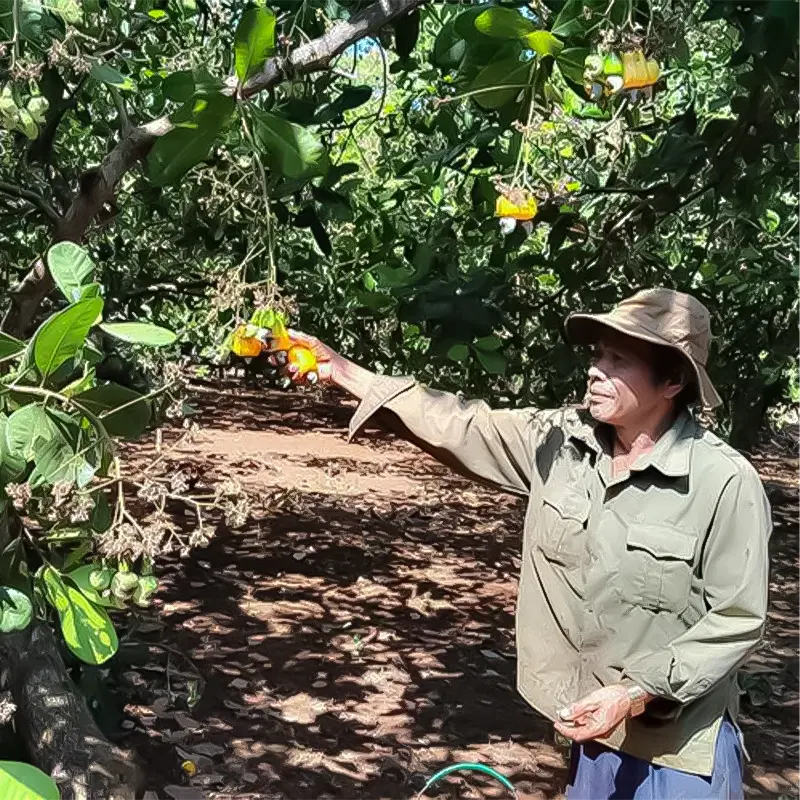
Cashew nut production in Indonesia is mostly confined to the eastern regions of the country. There are indications that the areas of cashew nut cultivation are steadily increasing. For example, in 1978, the area cultivated with cashew nuts was a little over eighty thousand hectares with a total production of 8,800 tonnes. This increased to over two hundred and fifty thousand hectares with a production of 23,305 tonnes in 1988. In 1996, the area increased further to reach nearly five hundred thousand hectares. The primary producing regions are the provinces of - Southeast Sulawesi (46%), South Sulawesi (23%), East Java (10%), West and East Nusa Tenggara ( 4%), Bali (3%) and other smaller regions (14%). The increase in production area did not show a significant improvement in cashew crop yields. This is majorly because of the utilization of unselected planting material and poor management practices followed by growers. One of these practices involves planting and harvesting outside the typical raw cashew nut season in Indonesia."
Indonesia Raw Cashew Nut Production Season
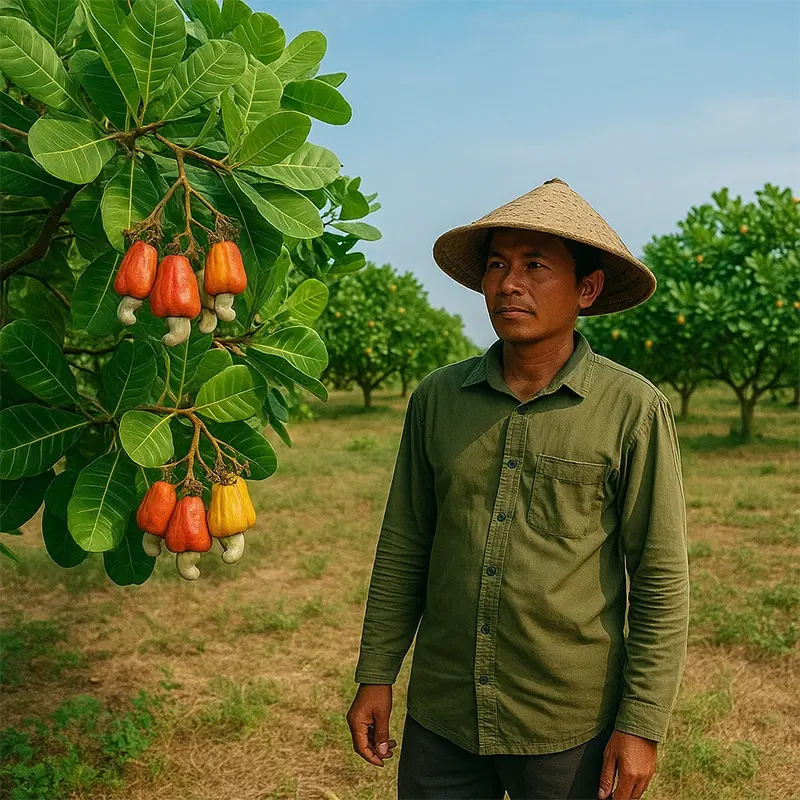
The time of harvest varies from region to region, but is usually carried out during the dry season from July to November. In Southeast Sulawesi, the cashew harvesting months last from July until September, while for orchards in western and eastern Nusatenggara this period lasts from September through November. These differences are mainly due to microclimatic variations between regions."
Typical Nature Of Cashew Nuts Production In Indonesia
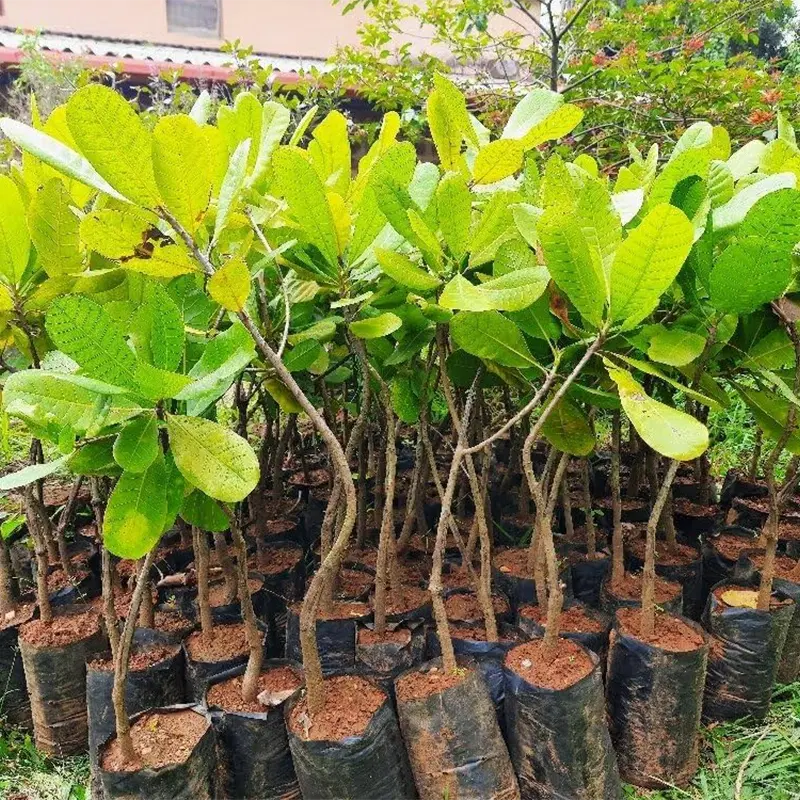
No serious breeding work has been done so far to develop superior clones and farmers have been forced to make use of their own planting material. This has now been recognized as a major disadvantage to the growth of the Indonesian cashew industry. Some measures have been taken but these resulted in little to no success. Although the Extension Directorate of the Ministry of Agriculture has recommended several selections of high-yielding mother trees identified as sources of seeds in the main production areas, these improvements in the condition of germplasm have not yet been achieved substantially."
The..
In addition to selections identified as bulk populations, some collections of superior germplasm are also available at the Spices and Medicinal Crops Research Institute which was commissioned for cashew cultivation improvement. The potential productivity of these bulk populations ranges from 900 to 2200 kg/ha/year. As the number of trees for each one of these selections is limited, an immediate impact on production cannot be witnessed in the short term, although a long term multiplication program can be implemented for future recommendations."
The...
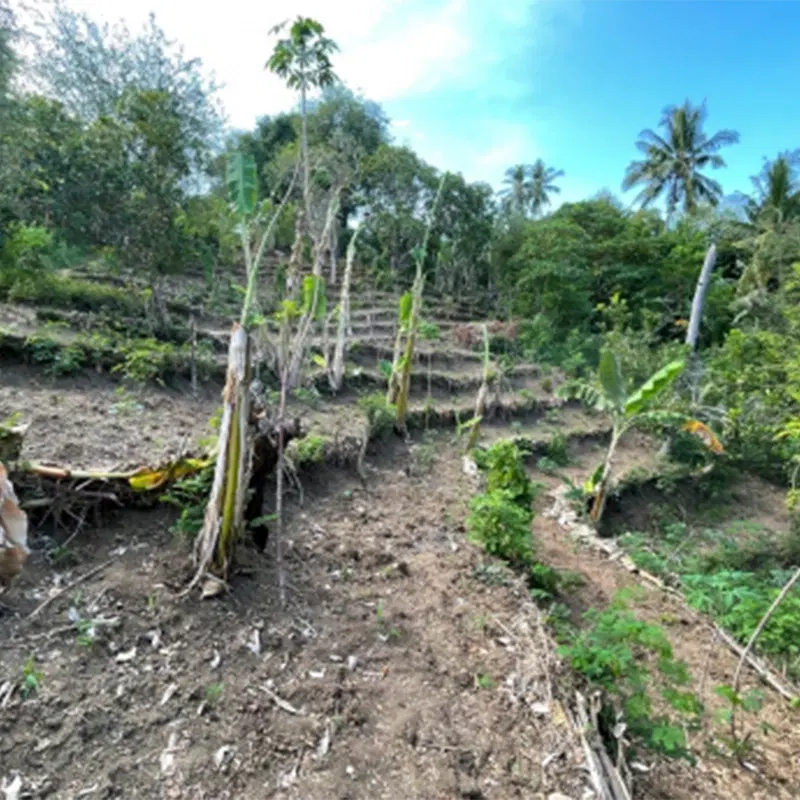
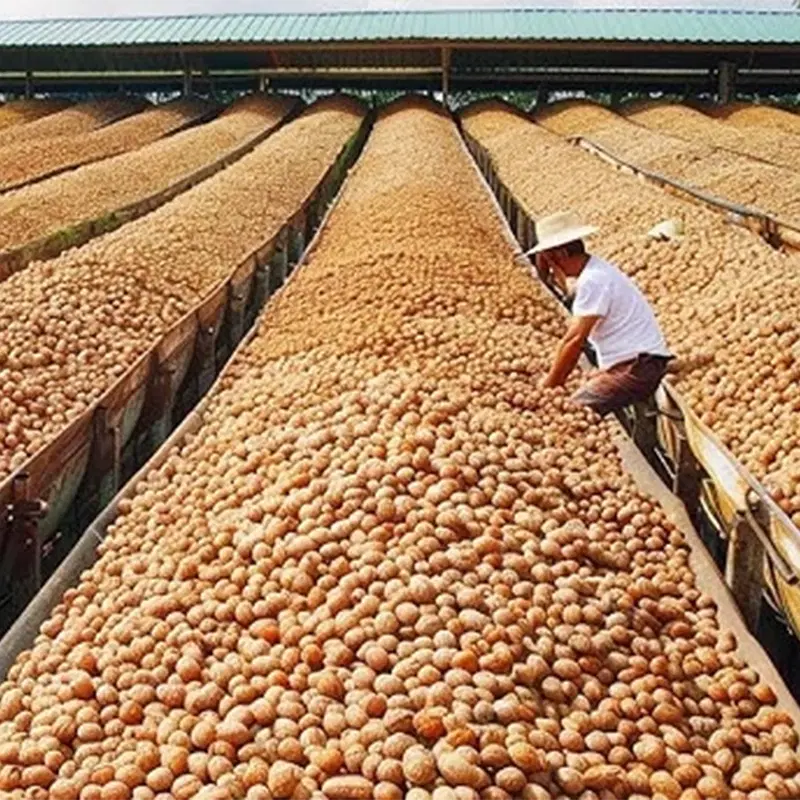
There has been little success in using clonal material for the artificial propagation of cashews. The majority of plantations are therefore established from seed progenies. However, going forward, vegetatively propagated planting material will be used for new areas, once the techniques are refined. The plantations are established on flat land as well as hilly areas. When intercrops are to be grown during the rainy season, farmers clear their land, but weeds are allowed to burgeon in the dry season after harvesting the annual crops. Potential fire hazards during the dry season discourage weeding and collection of dry vegetation in summer. Torrential monsoon rains also tend to erode hill slopes when vegetation cover is eliminated."
The..
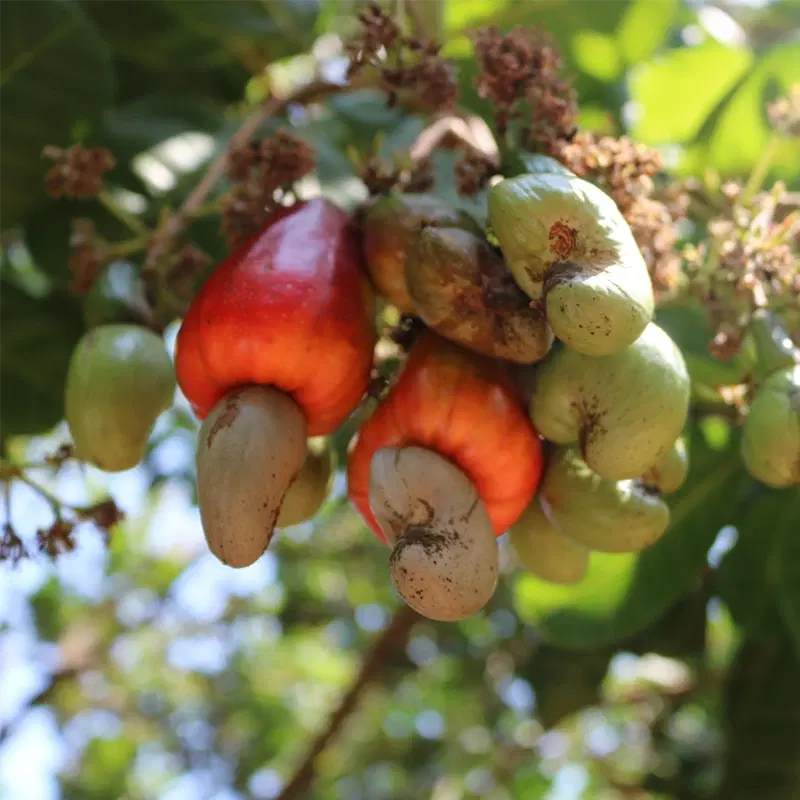
The operations of clearing and digging pits are carried out one or two months before planting. The tree spacing applied by farmers ranges from 6m x 6m to 10m x 10m or more. When it comes to afforestation programs, the spacing practiced was generally 4m x 4m with the intention of ensuring good ground cover. Due to its widespread growth pattern, cashew trees perform poorly and are less productive at high plant densities. With strong competition for water and overpopulation, these plantations become unprofitable. The current practice adopted by farmers is therefore to increase the spacing in order to use the cultivation lanes for the cultivation of intercrops such as upland rice, maize, cassava, etc. In general, cashews receive very little attention as a crop. They are considered more of a forest tree than an agricultural crop, as they do not seem to need much attention compared to other crops. As a result, producers incur minimal production costs for the maintenance of cashew orchards. "
The...
Since cashew is typically grown on marginal land where farmers face long periods of drought without any access to irrigation, it is not just the area of land and resources that limits them, but also the high labor inputs required to cultivate many annual crops during the short rainy season. As the cashew trees grow there is less competition with the weeds, maintenance and management issues will decrease, with the exception of clean weeding under the canopies to facilitate harvesting. The only thing that's done on an orchard in the dry season is harvesting and occasional weeding is carried out at the end of the dry season, before the onset of the rainy season. Farmers often fear the risk of fire when dry plant residues are piled up in cashew plantations during the summer months."
The..
As subsistence agriculture involves the dominant land use system in arid and marginal lands where cashews are grown, farmers place much higher priority on their annual food crops such as maize, upland rice, cassava, etc. Intercropping capacity is an important economic factor in determining planting distances for permanent cashew cultivation, especially in Eastern Indonesia where a limited choice of annual crops is available to farmers. In addition, the use of fertilizer for annual intercropping indirectly benefits the principal cashew plantations."
The Inability Of The Indonesia Cashew Association
Cashew nut processing and value addition is extremely limited in the Indonesian cashew industry. Only a handful of groups of women farmers produce kernels with strong government support and few market links. The extension of government assistance will help overcome the low interest in cashew cultivation and insufficient knowledge about cashew production practices. With limited resources, the cashew association of Indonesia cannot do much to prevent farmers from focusing on other major crops, except occasionally indulge in the free distribution of seedlings to cashew farms."
The..
The inputs from suppliers and financial institutions are not relevant enough for cashew producers to go after their ideal customers. They have no vision and are missing the ability to develop their activities in the cashew sector. Farmers depend on the prices set by the traders and have limited negotiating powers. Farmers' associations and cooperatives do not have services for cashew producers. Farmer cooperatives along with the Indonesia cashew association do not focus on providing market information services to members. The prices set by buyers and farmers, selling individually, have no sufficient bargaining power. Collective bargaining by cooperatives or farmer groups is rare. Cooperatives and farmer groups generally do not have the capacity to expand aggregation and wholesale services for their members."
Comextra Majora, Paving The Way For SCashews - A Prominent Supplier Of Indonesia Raw Cashew Nuts
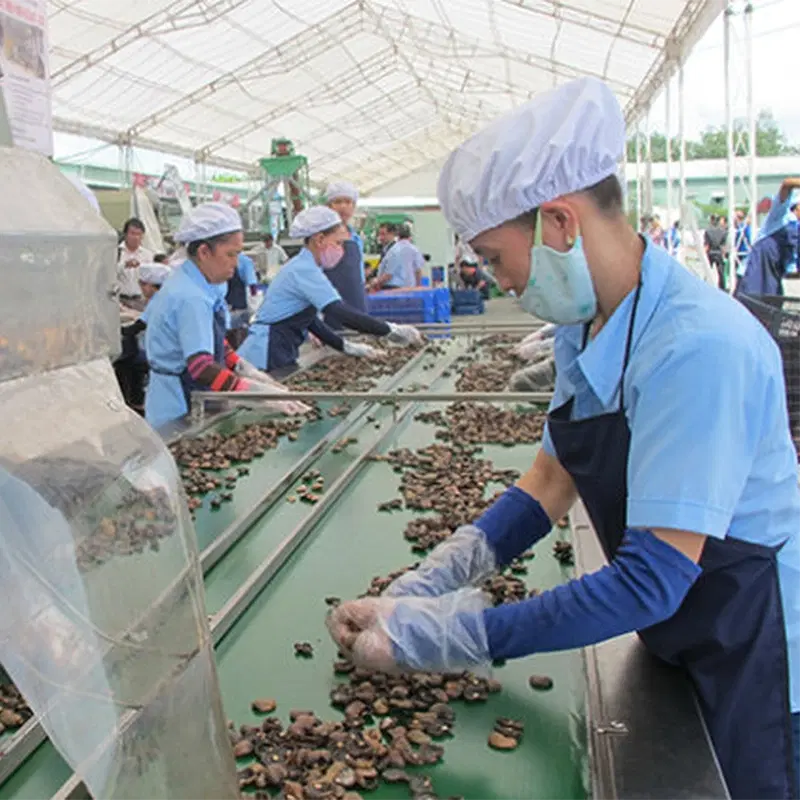
Comextra is a cashew nut shelling plant located in Makassar, Sulawesi, Indonesia. The factory is a fully developed cashew shelling operation, with large capacity. It is approved by many major buyers and has HACCP certification. It was built with the intention of taking cashews in-shell and shelling them, grading them and packing them for export."

The...
The workmanship is of good quality. The consultant who undertook this study has purchased containers from the factory in the past, as have companies such as Kraft Foods and Ann's House of Nuts in the United States. A few years ago, the factory stopped all shelling (as opposed to grading and packaging) and started a program to shell nuts in the villages where the cashews are sourced. There has long been a tradition of bombing villages in Sulawesi, so skills were available. The number of whole grains is high (estimated at over 80%). Broken and whole are purchased at differential prices. The nuts are shelled and stored in plastic crates supplied by Comextra Majora. The buyer regularly collects the shelled nuts. Shelling is a fairly slow process, but the in-shell can be stored for up to a year. Today, Comextra does not shell any nuts but absorbs shelled products at high humidity with the testa intact. Peeling, heating, sizing and packaging are carried out at the factory in accordance with internationally recognized standards. The Comextra Majora model has made it possible for SCashews to do what it is known for doing best today - serving as the go-to supplier of raw cashew nuts from Indonesia, for cashew retailers, confectioners, restaurateurs and hoteliers from across the globe. If you wish to partner with a globally reputed supplier of Indonesia raw cashew nuts, get in touch with us at SCashews, today!"
Indonesia Cashew Nuts Price In 2025
Producers market their products through local traders and intermediaries who collect and supply exporters and processors. The price of cashew nuts from Indonesia in 2021 are around 0.5 USD per kilogram of raw nuts and 3 to 4 USD for kernels. Farm gate prices are remunerative and tend to increase each year. The cashew cultivation development programs in the east of the country are therefore easily accepted by farmers."
The..
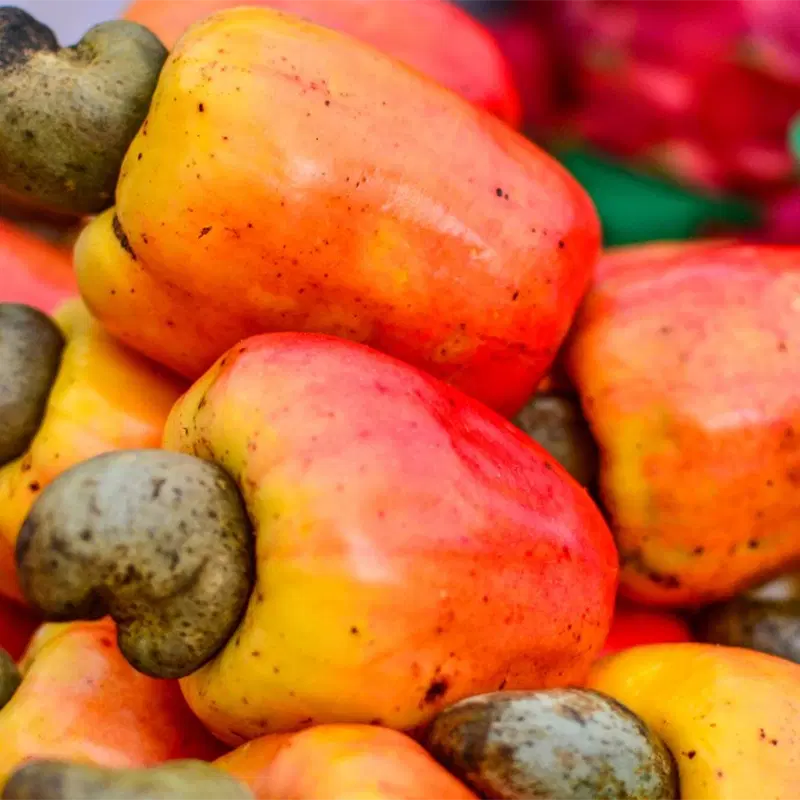
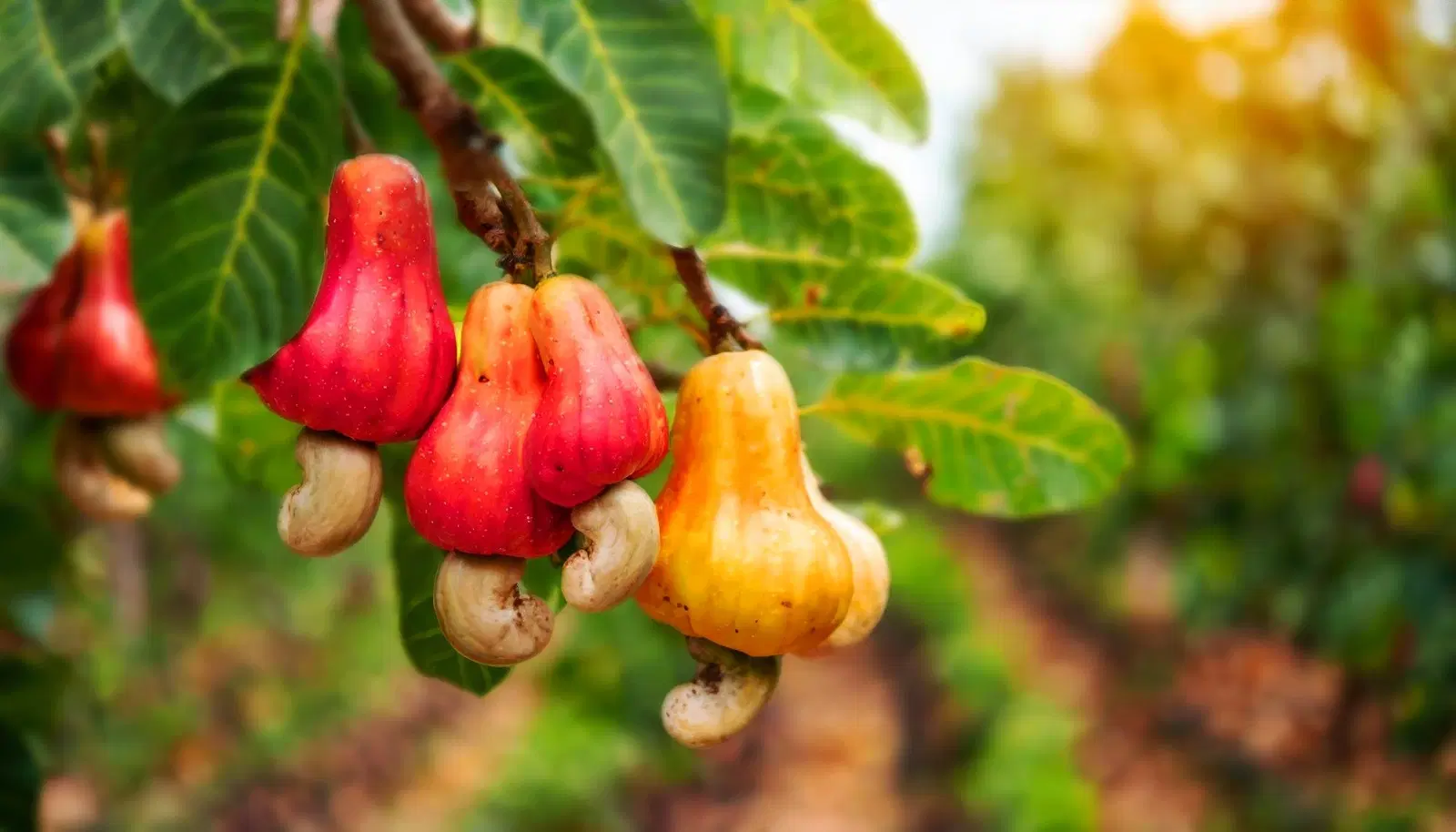
The main source of income for producers is cashew nuts. Other products like cashew apple and CNSL are of little importance. In some areas, the cashew apple can be marketed, used as manure or fed as animal feed. The economic value of the CNSL is only exploited by a few processing industries located in the country."
Who We are!
A Little About SCashew's Nuts
Ever since we came into being, SCashews has strived to be the best at what we do - procuring, supplying and delivering raw and processed cashew nuts of impeccable quality to our global clientele. In doing so, we have carved a niche for ourselves, as reliable and renowned suppliers of both raw and processed cashews from the world's biggest cashew producing nations.
Quality & Standard
Ethically sourced from the best cashew producing nations in the world grown in the biggest cashew farms in the globe.
Best In the Industry
Subject to stringent quality-assessment measures that are carried out both manually as well as with using advanced instruments.
Cost-effective merchandise
Our client's enjoy being the sole purveyors of some of the tastiest, organically-grown cashews available in the globe.
Safe shipping/transport
Safe and fast shipping on all order
Quality & Standard
Ethically sourced from the best cashew producing nations in the world grown in the biggest cashew farms in the globe.
Best In the Industry
Subject to stringent quality-assessment measures that are carried out both manually as well as with using advanced instruments.
Cost-effective
Our client's enjoy being the sole purveyors of some of the tastiest, organically-grown cashews available in the globe.
Safe shipping/transport
Safe and fast shipping on all order

Statistics on the use or marketing of CNSL or the percentage of nut shelling by farmers and processors are not available. The main difficulty in shelling walnuts is the great variability in size and quality that results. The prices of nuts also vary for different qualities of whole and broken kernels.